



Smoke testing is an essential technique in the plumbing industry for quickly and non-invasively identifying leaks, faulty connections, and defects in sewer systems. In both residential and commercial settings, this method is invaluable for maintaining safety, preventing major repairs, and ensuring compliance with high standards for building infrastructure. For professionals or property owners looking to learn more about smoke testing plumbing systems, this guide explains the process, its many benefits, common issues it detects, and real-world applications.
This inspection strategy has gained widespread use because it provides a clear, visual way to spot hidden issues that might otherwise go unnoticed until significant damage occurs. The procedure uses non-toxic smoke introduced into pipes, which escapes through cracks or breaks, making it straightforward for inspectors to determine exactly where problems exist. By using smoke testing, entire communities and cities can proactively manage their sewer systems and prevent health hazards linked to improper drainage.
With its track record in both individual structures and municipal-scale projects, smoke testing is now considered one of the most reliable diagnostic tools in property management and public works. Homeowners, property managers, and municipal officials all benefit from its early detection capabilities, which can head off both environmental and financial crises.
When leaks are left undetected, both property damage and exposure to hazardous sewer gases can have lasting consequences for occupants. Thorough inspections backed by smoke testing contribute to healthier indoor environments, lower repair costs, and compliance with public health standards.
What Is Smoke Testing?
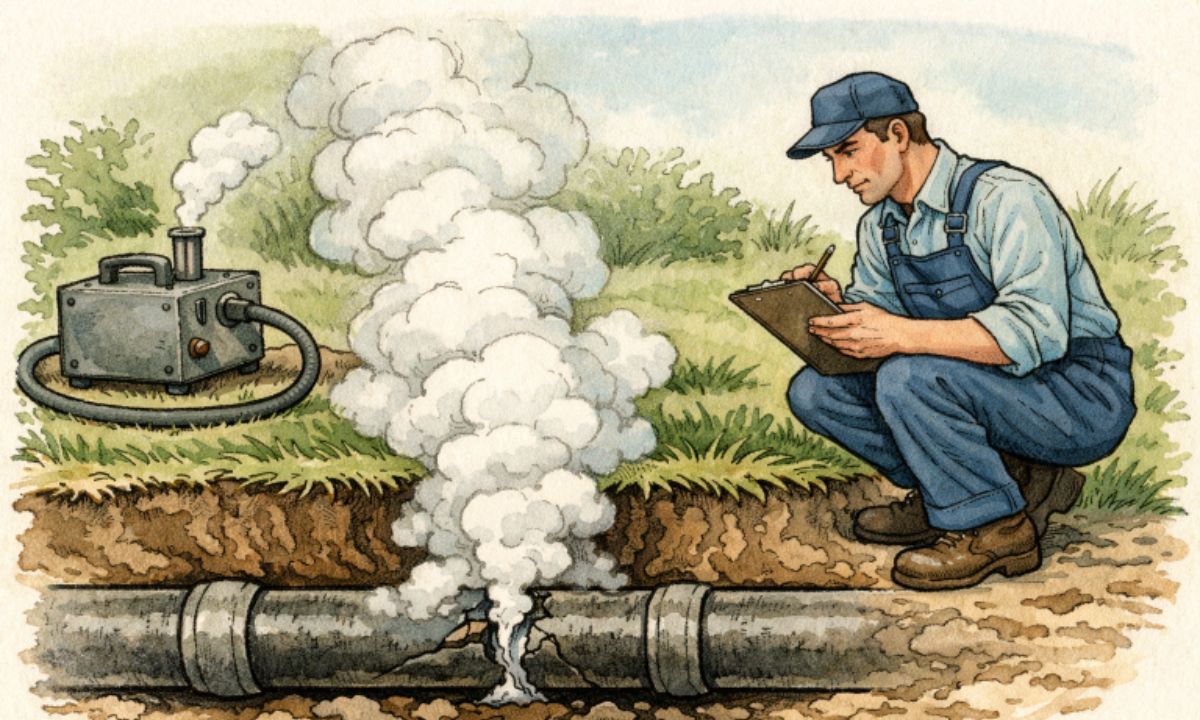
Smoke testing is a specialized inspection technique where professionals introduce specially formulated, non-toxic smoke into a plumbing system’s drains or sewers. If there are any defects, such as cracks, improperly sealed joints, or unauthorized connections, the smoke will escape through those points, allowing inspectors to detect problems at the surface. This method is highly effective for pinpointing hard-to-find leaks and issues that are often hidden behind walls or underground.
How Does Smoke Testing Work?
The process of smoke testing involves several key steps:
- Preparation: Inspectors begin by sealing all plumbing fixtures and ensuring that all drain traps are filled with water to prevent smoke from entering the building.
- Smoke Introduction: A powerful smoke-generating machine is connected to the system, usually via an outdoor cleanout or manhole. Non-toxic smoke is pumped into the pipes, filling all available space.
- Observation: As smoke fills the sewer and drains, inspectors carefully watch the property’s exterior and any exposed pipe runs. Visible plumes of smoke pinpoint cracks, breaks, or improper connections.
- Documentation: Every detected defect or area of concern is recorded, photographed, or both, facilitating prompt action and repair.
This straightforward, visual approach helps detect even minor issues before they escalate.
Common Issues Detected by Smoke Testing
Smoke testing excels at finding a range of plumbing problems, including:
- Cracked or Broken Pipes: These often manifest when aging pipes shift, freeze, or corrode.
- Faulty or Loose Connections: Badly joined pipes or those that have become loose over time will allow smoke to escape at the seams.
- Illegal or Unauthorized Connections: Some properties may have unauthorized plumbing connections that introduce stormwater or graywater into the sewer system, leading to environmental violations and system overload.
- Dry Traps: Infrequently used drains might lose their water seal, allowing smoke (and potentially sewer gases) to pass through and be detected inside buildings.
According to the EPA, early detection of these flaws can help communities avoid serious public health risks and costly repairs.
Benefits of Smoke Testing
The advantages of smoke testing include:
- Non-Invasive Process: There is usually no need for excavation, wall opening, or demolition, preserving property integrity.
- Cost Savings: Reduces the time, materials, and labor typically required by older inspection and repair methods.
- Comprehensive Coverage: A single smoke test can identify multiple issues throughout a property’s system, ensuring nothing goes overlooked.
- Preventative Maintenance: By catching minor leaks or weaknesses early, property owners can avoid extensive future repairs and associated disruptions.
These benefits make smoke testing highly recommended by plumbing professionals and municipal utility operators throughout North America.
When to Conduct Smoke Testing
Professionals recommend smoke testing in several situations:
- Persistent Odors: If unexplained sewer or moldy odors are present, a hidden leak is likely to blame.
- Unexplained Water Stains or Wet Spots: Moisture on walls, ceilings, or floors without an obvious source indicates a hidden plumbing issue.
- Before Purchasing Property: Pre-purchase inspections can reveal existing defects and prevent expensive surprises for new owners.
- Routine Maintenance: Regular plumbing system evaluations can preserve property value and occupant health.
Safety Considerations
Smoke testing is considered very safe when handled by trained professionals. Specific safety measures include:
- Use Only Non-Toxic Smoke: The smoke mixture must be formulated to avoid any health or environmental hazards.
- Maintain Ventilation: Ensuring adequate airflow prevents excessive smoke accumulation in any one area.
- Notify Occupants and Neighbors: Prior notification prevents undue alarm and confusion when non-toxic smoke appears.
Case Studies
Numerous municipalities and organizations have successfully employed smoke testing to enhance the safety and reliability of their sewer systems. In February 2026, the city of Plaquemine conducted a comprehensive smoke test to identify sewer leaks that were affecting local homes and businesses. Residents were well informed about the process, which used only safe, non-staining smoke and resulted in critical repairs to the underground infrastructure.
A similar program was carried out in Daytona Beach in April 2026. City officials conducted odorless smoke testing to pinpoint cracks and leaks in the system and prevent rainwater intrusion, which can increase the risk of sewer overflows and costly damage.
Conclusion
Smoke testing stands out for its speed, accuracy, cost-effectiveness, and versatility in identifying plumbing system issues. Whether the task involves a single-family residence or a municipal sewer network, this non-invasive method plays an essential role in preserving healthy environments, maintaining infrastructure integrity, and safeguarding public health.
Read Also: Eco-Friendly Plumbing Solutions for Modern Homes