




The construction industry is undergoing a transformation driven by the urgent need to minimize environmental impact and boost long-term efficiency. Innovative materials, sourced both from nature and advanced engineering, are taking center stage in shaping eco-conscious structures for future generations. As green construction practices gain momentum, contractors and developers are seeking reliable partners like Snyder Construction to seamlessly integrate sustainable building strategies into projects of all sizes.
Advancements in building materials are reducing carbon footprints and improving access to affordable, durable structures. Utilizing innovations like mycelium-based panels and cross-laminated timber helps address housing deficits and resource scarcity. Technologies such as 3D printing and self-healing, energy-storing concrete are driving the shift towards sustainable construction. More builders are adopting materials that promote energy efficiency and natural resilience, crucial for meeting climate goals and urban growth demands. This transformation reflects a global consensus: the future of construction merges traditional wisdom with scientific innovation to create a resource-preserving and well-being-enhancing built environment.
Mycelium-Based Building Panels
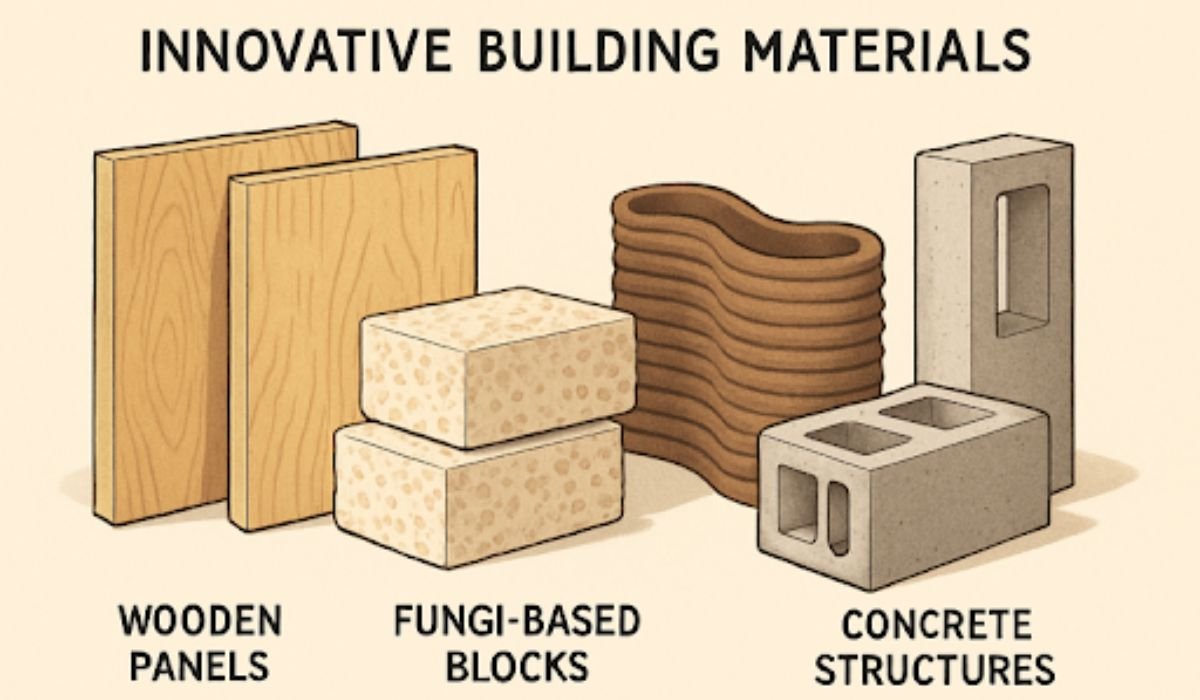
Mycelium, the root network of fungi, is emerging as a key player in earth-friendly construction. Companies like MycoTile in Kenya are pioneering the use of mycelium combined with agricultural waste and natural fibers to produce biodegradable panels. These panels provide insulation and serve as sustainable options for interior design while naturally breaking down at the end of their lifecycle. Solutions like these are instrumental for rapidly growing urban areas and communities struggling with affordable housing shortages.
Cross-Laminated Timber (CLT)
Cross-laminated timber, or CLT, is engineered from layers of wood arranged at right angles and glued together, offering remarkable structural strength. Sweden’s upcoming Stockholm Wood City is set to become the world’s largest urban development built entirely from timber, showing how CLT is scaling up in major projects. CLT reduces construction timelines, traps carbon within building materials, and enables healthier living environments through its breathability. Its growing popularity in cities worldwide is evidence of timber’s comeback as a modern, renewable resource for sustainable construction.
3D-Printed Clay Houses
3D printing technology is opening new frontiers for rapid, sustainable, and affordable building. The Tecla house, created by Italian architecture studio MCA and WASP, stands as a groundbreaking prototype made entirely from locally sourced clay using sophisticated 3D printers. This approach minimizes both waste and transportation costs while leveraging abundant earthen materials. By lowering the energy requirements typically associated with housing construction, 3D-printed clay homes offer viable solutions for regions facing acute housing challenges.
Self-Healing Concrete
Structural longevity in modern construction often depends on concrete’s resilience. Emerging research from MIT and other institutions has led to the development of concrete batteries with self-healing properties by incorporating electron-conducting materials. These breakthroughs enable buildings and infrastructure not only to store renewable energy on-site but also to automatically repair microcracks over time. Incorporating self-healing concrete reduces maintenance costs and extends the usable lifespan of critical structures, representing a step toward smarter, more sustainable cities.
Ferrock
Ferrock, a relatively new contender in sustainable construction, is manufactured from recycled industrial byproducts such as steel dust and glass shards. This carbon-negative material absorbs CO₂ during curing, making it more sustainable than even the greenest forms of cement. Its adaptability, flexibility, and resistance to cracking make it suitable for demanding construction applications, including infrastructure and earthquake-prone regions. As more builders seek to reduce concrete’s environmental footprint, Ferrock stands out as a game-changing alternative.
Graphene-Enhanced Materials
Graphene’s unique characteristics, its exceptional strength, conductivity, and flexibility, have made it a focus of research into advanced construction materials. Graphene-enhanced concrete demonstrates higher durability, greater crack resistance, and improved moisture resistance, making it an excellent candidate for structures exposed to severe environmental conditions. Graphene coatings also allow for the creation of energy-efficient, erosion-resistant facades and surfaces, extending the useful life of buildings while minimizing repairs. As experimentation and commercialization continue, graphene’s role in building technology is only set to increase in the coming years.
Conclusion
Innovative sustainable materials are redefining what builders can achieve, ensuring today’s construction practices align with tomorrow’s environmental realities. From biodegradable fungal panels and engineered timber to futuristic 3D-printed clay homes, self-healing concrete, Ferrock, and graphene enhancements, these technologies offer real answers for climate resilience and resource efficiency. By embracing these materials and partnering with forward-thinking experts, builders can construct durable, affordable, and environmentally responsible spaces for communities around the world.
YOU MAY ALSO LIKE: The Growing Role of Global Construction in National Security Upgrades