





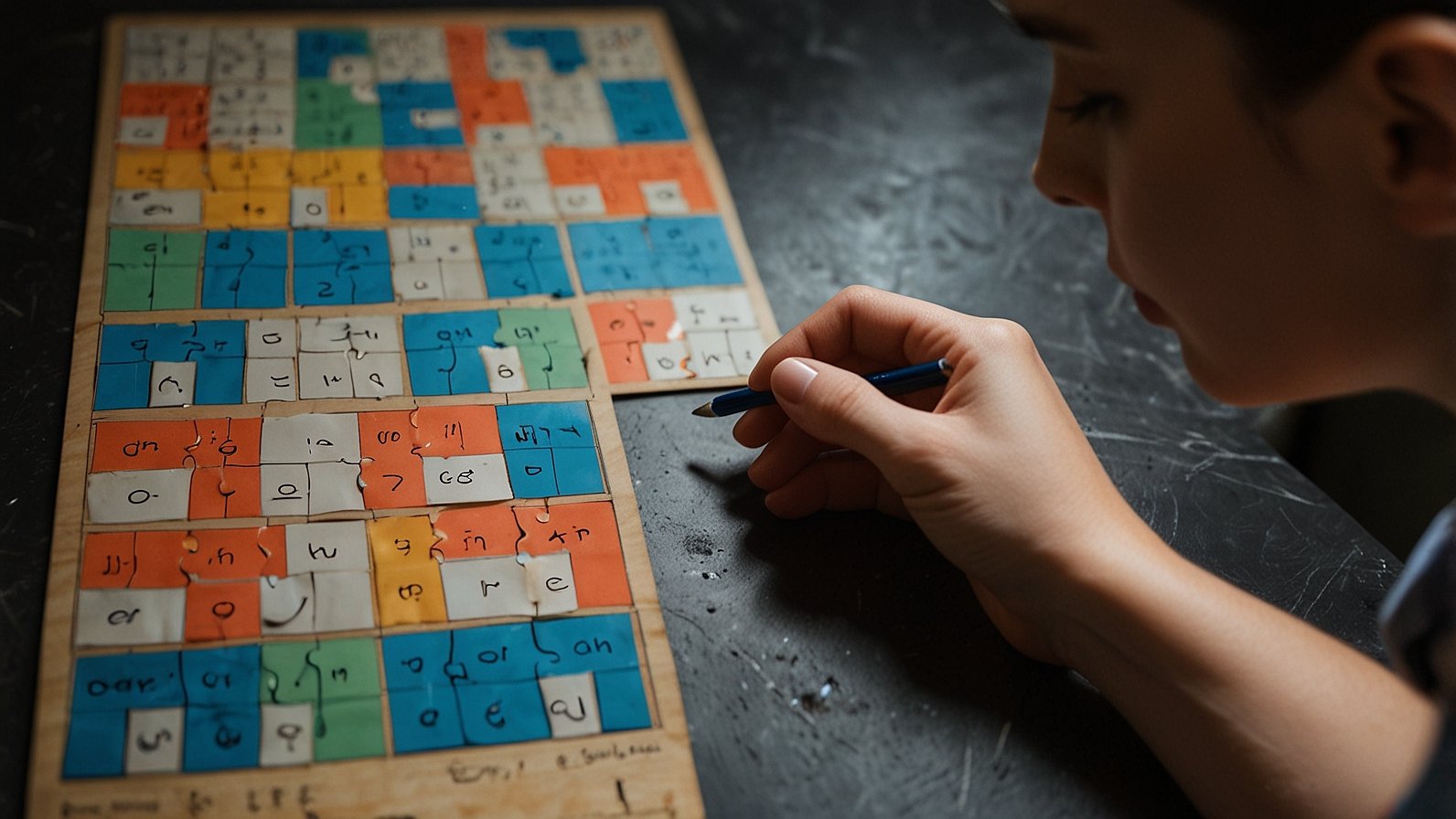
Ever stared at a tangled web of clues, feeling that delicious itch to unravel a mystery? That’s the unique allure of intégrammes, the elegant French cousin of logic-grid puzzles. Forget random guessing; these are structured battles of wits where you become a detective, using pure deduction to connect the dots. Whether you’re a seasoned solver or a curious newcomer, the world of intégrammes offers a profoundly satisfying mental workout. Let’s pull up a chair, sharpen our pencils, and dive into the methodical magic of these puzzles.
What Exactly Are Intégrammes?
Think of intégrammes as a sleek, self-contained universe of logic. You’re presented with a scenario—like “Five friends live in five different colored houses, own five different pets, and have five different jobs.” The puzzle gives you a set of seemingly fragmented clues, such as “The doctor lives next to the blue house” or “Alex doesn’t own the cat.” Your mission? To cross-reference every single clue on a grid to discover the one and only perfect solution where all relationships align.
Unlike sprawling crosswords or vague riddles, intégrammes are beautifully precise. They follow strict rules of one-to-one correspondence (each item is paired with one and only one other item in each category) and provide all the information you need within the puzzle itself. The classic “Einstein’s Riddle” or “Zebra Puzzle” is perhaps the most famous global example of this genre, which the French have perfected and branded as logigrammes or intégrammes.
Your Step-by-Step Guide to Solving an Intégramme
Feeling intimidated? Don’t be! Solving these puzzles is a systematic process, almost like building a house brick by logical brick. Here’s how any beginner can get started:
- Set Up Your Grid: This is your command center. List the categories (e.g., Names, Colors, Pets) on the X and Y axes. You’ll create a matrix of boxes where rows and columns intersect.
- Decode the Clues: Read each clue carefully. Clues come in two main flavors:
- Direct Positive: “Anna is the pianist.” You can immediately mark a solid ‘X’ in all other boxes in Anna’s row and the Pianist column, and a definitive ‘O’ at their intersection.
- Relative Negative: “The person with the red car does not live in Paris.” This eliminates a specific possibility.
- Work the Grid: Use process of elimination. If you deduce that Mark owns the dog, you can eliminate ‘dog’ from all other people’s rows. As you mark impossibilities (X) and certainties (O), patterns emerge.
- Look for Chain Reactions: The real “aha!” moments come from linked clues. For instance, if clue 1 says “The baker is in the yellow house,” and clue 7 says “The person in the yellow house owns a parrot,” then you’ve just linked the baker to the parrot without it being stated directly.
- Double-Check and Triumph: When your grid is complete, every category should have one unique match. Re-read the clues against your solution to ensure no conflicts. That moment of perfect alignment is your reward!
Common Clue Types in Intégrammes
| Clue Type | Example | How to Handle It |
|---|---|---|
| Direct Association | “Clara is the engineer.” | Mark the direct match (O) and eliminate all other options for Clara and the engineer. |
| Relative Position | “The green house is immediately to the left of the white house.” | Map this spatial relationship on a small sketch or note it separately. |
| Negative Association | “Sam does not drink tea.” | Place an X at the intersection of Sam’s row and the Tea column. |
| Comparative | “The gardener is older than the teacher.” | This establishes an order but not fixed positions; note it and use it later. |
Why Your Brain Loves Intégrammes: More Than Just a Game
You might think you’re just killing time, but solving intégrammes is like taking your mind to the gym. The benefits are tangible and transfer to everyday life.
- Boosts Deductive & Critical Thinking: You learn to move from general clues to specific, ironclad conclusions, cutting through ambiguity.
- Enhances Concentration and Attention to Detail: Missing one tiny word (“immediately,” “not,” “to the left of”) can lead you down a rabbit hole. These puzzles train hyper-focus.
- Develops Systematic Problem-Solving Skills: They break the habit of haphazard guessing and instill a stepwise, organized approach to complex problems.
- Provides a Digital Detox & Sense of Accomplishment: In a world of notifications, the focused silence of solving a puzzle is therapeutic. Finishing one delivers a real dopamine hit of achievement.
Consequently, it’s no surprise that educators and cognitive therapists often use logic-grid puzzles as training tools. Companies like Microsoft and Google have historically valued this kind of structured logic in their hiring processes, precisely because it mirrors the skills needed to debug code or design complex systems.
Intégrammes in the Classroom and Beyond
Teachers, listen up! These puzzles are a secret weapon. Imagine a history class figuring out “Which Roman emperor owned which famous artifact and ruled during which significant event?” or a language class dediving “Which student is reading which French novel and has which favorite pastry?”. Intégrammes make learning active, requiring students to engage with facts relationally, not just memorize them.
Meanwhile, brands have caught on. Puzzle books from publishers like Larousse and magazines like Le Figaro regularly feature intégrammes. Online platforms, such as Logic Puzzles and Puzzle Baron, offer endless interactive versions, allowing you to solve digitally without ever drawing a grid. The community on sites like Reddit’s r/puzzles thrives on sharing and solving particularly devious creations.
Ready to Play? Your Starter Kit for Intégrammes
Convinced to give it a try? Here’s your quick-start guide:
- Start Simple: Begin with puzzles that have only 3 or 4 items per category. Books like “The Great Book of Logic Puzzles” often have beginner sections.
- Gather Your Tools: All you need is a pencil with a good eraser and a neat hand for drawing grids. Many solvers swear by grid paper.
- Find Your Source: Check out apps like “Logic Grid Puzzles” on iOS/Android, or websites like logicpuzzles.org for free, daily puzzles.
- Practice Pattern Recognition: The more you solve, the faster you’ll recognize common clue structures and logical inferences.
- Join a Community: Stuck on a tough one? Online forums are full of friendly solvers who offer hints without spoiling the solution.
Conclusion: The Enduring Charm of a Logical Journey
In the end, intégrammes represent more than a pastime. They are a celebration of clear thinking, patience, and the human love for a satisfying resolution. In a complex world, they offer a microcosm where every problem has a logical solution waiting to be uncovered. They remind us that by breaking down challenges, paying close attention, and connecting the dots, we can find clarity.
Your Next Steps:
- Try one beginner puzzle online today.
- Share a puzzle link with a friend and compare solving styles.
- Challenge yourself with a classic like the Einstein Riddle.
- Notice how the skills you use translate to organizing a schedule or planning a project.
- Most importantly, have fun and enjoy the process!
What was your first intégramme experience like? Do you have a favorite puzzle or a monumental “aha!” moment to share? Tell us your story in the comments below!
You May Also Like: What Is Gaymetu E? Your Guide to Queer-Inclusive Gaming
FAQs
Are intégrammes the same as Sudoku?
Not quite! While both are logic puzzles, Sudoku focuses on number placement within a fixed grid with arithmetic constraints. Intégrammes are about finding qualitative relationships between words or categories using linguistic clues and a solver-created grid.
I get frustrated and give up easily. Any advice?
Absolutely. Start with the simplest puzzles possible. If you’re stuck, walk away for 10 minutes. Often, the brain resets and you’ll spot something you missed. Also, double-check that you’ve correctly entered all your Xs and Os from the given clues—a single missed entry can block progress.
How long should it take to solve one?
It varies wildly! A small 3×3 puzzle might take 2 minutes. A large, classic 5×5 puzzle like Einstein’s Riddle could take an hour or more for a first-timer. Speed comes with practice and recognizing logical patterns.
Can children solve intégrammes?
Yes! There are many child-friendly versions using simple, fun themes (like cartoon characters, ice cream flavors, or pets). They are excellent for developing early logical reasoning and reading comprehension skills.
Is there software that can solve them for me?
There are logic puzzle solvers and “cheat” tools online, but using them defeats the entire purpose and robs you of the cognitive benefit. The joy is in the struggle and the personal victory!
Where can I find the hardest intégrammes?
Look for dedicated puzzle books by masters of the genre, or explore online communities where enthusiasts create and share diabolically difficult original puzzles. The forums on Puzzle Baron’s site are a great place to start.
Do these puzzles help prevent cognitive decline?
While not a silver bullet, engaging in any cognitively stimulating activity, including logic puzzles like intégrammes, is widely recommended by neurologists as part of a brain-healthy lifestyle. They help keep neural pathways active and engaged.