




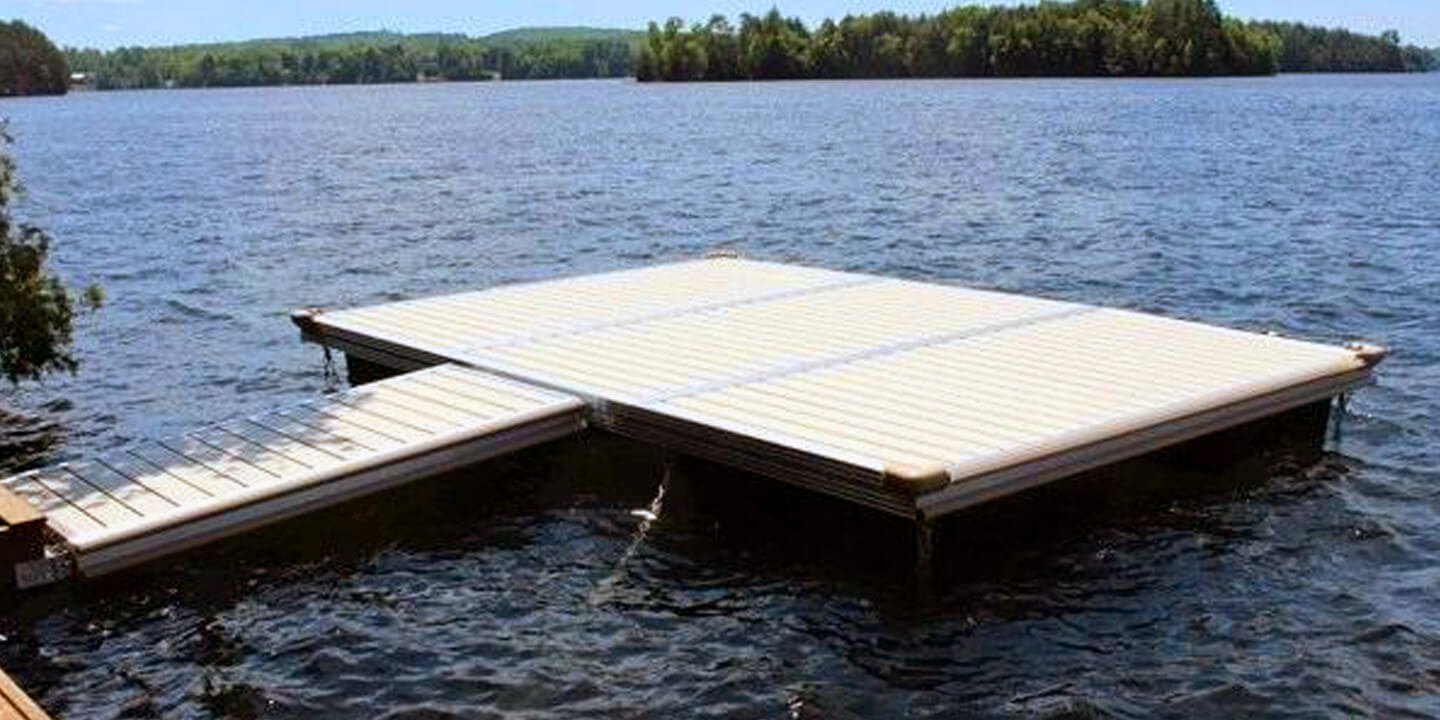
Deep water changes the way a dock needs to be planned. Fixed structures can become more complicated as depth increases, especially where the lake or river bottom drops off quickly. A floating system avoids some of those limits because it rises and falls with the water instead of depending on tall fixed supports beneath the deck. That can make an aluminum floating dock a practical option for properties where the shoreline gets deep fast.
Floating Sections Move With the Water
A floating dock sits on buoyant supports, so the deck follows changes in water level. That basic feature is useful in deeper water because the structure does not need to be supported from the bottom at every point.
The dock still needs proper anchoring, but its working height is controlled by flotation rather than by long legs or posts. On lakes with seasonal level changes, that can keep the walking surface closer to the same height above the water even as depth changes below it.
Deep Water Can Make Fixed Supports Harder to Use
Stationary docks often rely on pilings, posts, or other supports that reach the bottom. As water gets deeper, those components may become longer, harder to install, and more exposed to sideways forces from waves or current.
A floating system takes a different approach. Instead of carrying the dock vertically from the bottom, the flotation carries the deck while the anchoring system limits drift. Experienced floating dock builders can evaluate whether that arrangement fits the site and the amount of water movement the property sees.
Anchoring Matters More Than Depth Alone
Deep water does not remove the need for a solid anchoring plan. In fact, it can make anchor selection and placement more important because chains, cables, piles, or other systems may have to work through a greater range of movement.
The best setup depends on bottom conditions, water-level changes, wind exposure, boat traffic, and the shape of the shoreline. A boat dock builder should look at all of those factors before recommending a system. A dock that is stable in a sheltered cove may need a different anchoring arrangement on open water.
Aluminum Keeps the Structure Manageable
Aluminum is useful for floating docks because it provides strength without making the frame unnecessarily heavy. Lower structural weight leaves more of the flotation capacity available for people, decking, accessories, and normal dock use.
It also handles wet environments well because it does not rot like untreated wood framing. Owners comparing aluminum docks should still look at weld quality, hardware, flotation support, and connections. The material helps, but the entire system has to be well built.
Gangways Help Bridge Steep Shorelines
Deeper water often comes with a sharper drop near shore. That can leave the dock sitting farther from dry ground or at a different elevation than the bank.
A properly planned gangway can bridge that gap while allowing the floating section to move up and down. Its length and angle need to make sense for the site. If it is too short, access can become awkward during low water. If it is poorly positioned, it can put unnecessary stress on the dock connection.
Layout Becomes More Important Around Boats
In deeper water, owners may have more freedom to place slips where boats have adequate draft, but that does not mean every layout works well. Turning room, prevailing wind, wakes, and the way boats approach the dock should still guide the design.
Floating dock builders may also consider where lifts, ladders, bumpers, or storage will go. Those additions affect weight distribution and traffic flow. Planning them early keeps the dock from becoming crowded after the main structure is already in place.
A Well-Planned Floating Dock Can Adapt to the Site
The biggest advantage of a floating system in deeper water is flexibility. It can follow changing water levels, avoid the need for continuous bottom-supported framing, and work with shorelines that drop off quickly. That flexibility only pays off when flotation, anchoring, access, and layout are matched to the property.
For owners researching aluminum boat docks for sale for a deep-water shoreline, Flotation Systems Inc. offers a useful point of comparison. Its all-aluminum residential and commercial dock systems can include floating configurations, anchoring solutions, ramps, gangways, and other components that help shape a dock around the conditions at the water’s edge.