




Key Takeaways
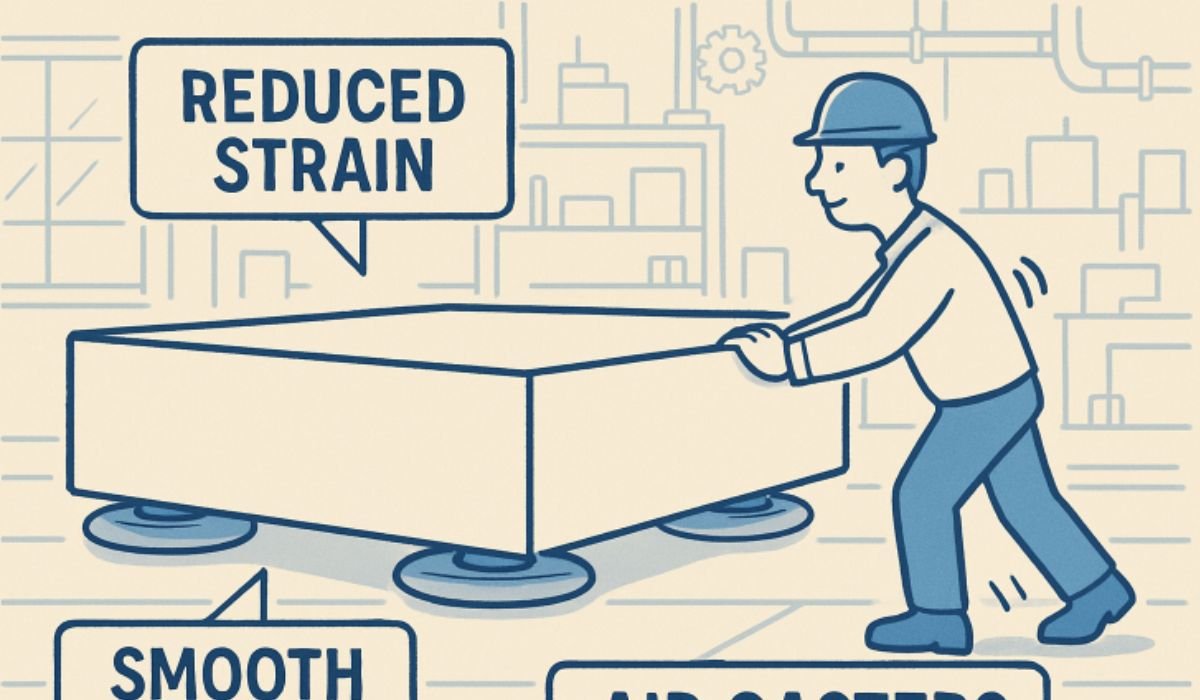
- Air casters significantly reduce physical strain and the risk of workplace injuries for employees.
- Their omnidirectional movement promotes stability and precise control, crucial for safe load handling.
- Utilizing air casters maintains floor integrity and lessens overall noise in industrial environments.
- Ideal for cleanroom compliance and minimizing damage to sensitive or high-value equipment.
Introduction to Air Casters
In modern industrial settings, safely transporting heavy loads is a priority that directly affects productivity, worker well-being, and overall operational efficiency. Suspension casters and air casters offer innovative solutions for material handling, each designed to minimize strain and enhance control. Suspension casters utilize shock-absorbing mechanisms to smooth movement over uneven surfaces, protecting both cargo and flooring. In contrast, air casters, often referred to as air bearings, employ a thin film of air to lift and glide heavy equipment with remarkable ease.
Unlike traditional wheels that require significant exertion and can lead to floor damage or operator injuries, these advanced caster systems distribute the entire load evenly, drastically reducing risks. This technology has become increasingly popular in industries that handle large and sensitive equipment, as it minimizes physical strain on operators and maximizes maneuverability—even in confined workspaces.
Reducing Physical Strain on Workers
Manual hauling, dollies, and forklifts have long been the go-to solutions for relocating heavy machinery or equipment on a shop floor. However, these methods can expose employees to overexertion, repetitive strain injuries, and chronic musculoskeletal disorders, especially when loads exceed recommended limits. Air casters address these issues by allowing a single operator to move massive objects—sometimes weighing several tons—with minimal physical effort. By virtually eliminating the need to push, pull, or lift, companies can better protect their workforce from injury and fatigue, leading to fewer accidents and lower health-related costs. According to multiple safety studies by OSHA, solutions that reduce manual exertion play a crucial role in preventing accidents and promoting ergonomic safety in industrial environments.
With reduced force requirements, air casters also help mitigate cumulative trauma that might arise from repetitive handling tasks. This capability is crucial for industries seeking to comply with safety standards and for organizations aiming to enhance workplace morale and job satisfaction.
READ ALSO: Model Number VH54S.5PH6: Precision Powerhouse for Industry
Enhancing Load Stability and Control
One of the standout features of air casters is their omnidirectional movement, which allows for smooth navigation in all directions with pinpoint accuracy. This greatly benefits industries where the ability to maneuver hefty loads in tight corners or restricted pathways is essential for both safety and space optimization. The seamless mobility afforded by air casters enhances workplace safety by minimizing the chance of tipping, unbalanced loads, or collisions with people or obstacles. This precision is especially advantageous for intricate assembly lines, aerospace manufacturing, and sectors handling large-format electronics.
IndustryWeek reports that stable and agile load-movement technologies, such as air casters, are a proven way to prevent workplace accidents caused by shifting or toppling loads.
Protecting Floor Surfaces
While traditional wheels or metal rollers can leave marks, dents, or even permanent damage to sensitive flooring, air casters distribute a load’s weight across a broader surface area, minimizing these effects. This gentle, even lift shields floors from concentrated point loads, limiting the risk of surface cracks and the tripping hazards often caused by uneven surfaces. By preserving floor integrity, facilities minimize costly repairs and cleaning, reduce liability, and contribute to a safer overall work environment.
Minimizing Noise Pollution
Loud environments are more than a nuisance—they can cause long-term hearing impairment and lower situational awareness. Unlike conventional industrial carts that clatter and rumble across hard surfaces, air casters glide quietly on a film of air, dramatically reducing background noise levels. Lower decibel levels help create a more comfortable and productive environment, reducing the likelihood of auditory injuries and enabling employees to communicate and focus more effectively while working.
Facilitating Cleanroom Compliance
Industries such as pharmaceuticals, semiconductor manufacturing, and biotechnology demand meticulously clean environments to meet regulatory standards and avoid product contamination. Air casters excel in these applications because they do not emit particulates, unlike some mechanical rollers that shed debris or lubricant. Their seamless, frictionless movement supports rigorous cleanroom protocols, preventing the release of airborne particles that could compromise sensitive products or processes. Enhanced cleanliness means reduced risk of contamination, cost savings from avoided recalls, and compliance with national and international cleanroom regulations.
Reducing Equipment Damage
Even small shocks or jostles during onsite moves can cause substantial damage to precision instruments and expensive machinery, resulting in unexpected downtime or repair expenses. Air casters facilitate gently controlled movements by “floating” the load slightly above the ground, mitigating the risk of sudden impacts and providing a cushion for delicate items. This careful handling helps facilities protect their investments, prevent workflow interruptions, and ensure that transport safety is baked into day-to-day operations.
Final Thoughts
Integrating air casters into industrial material handling procedures is a forward-thinking choice for safety-conscious organizations. By minimizing physical strain, stabilizing cumbersome loads, preserving flooring, lowering noise, facilitating cleanroom compliance, and reducing equipment damage, air casters support a healthier, safer, and more productive workplace overall. The adoption of air and suspension casters empowers businesses to meet modern safety and efficiency expectations, future-proofing processes for years to come.
YOU MAY ALSO LIKE: How Media Blasting Enhances Surface Preparation Across Industries