





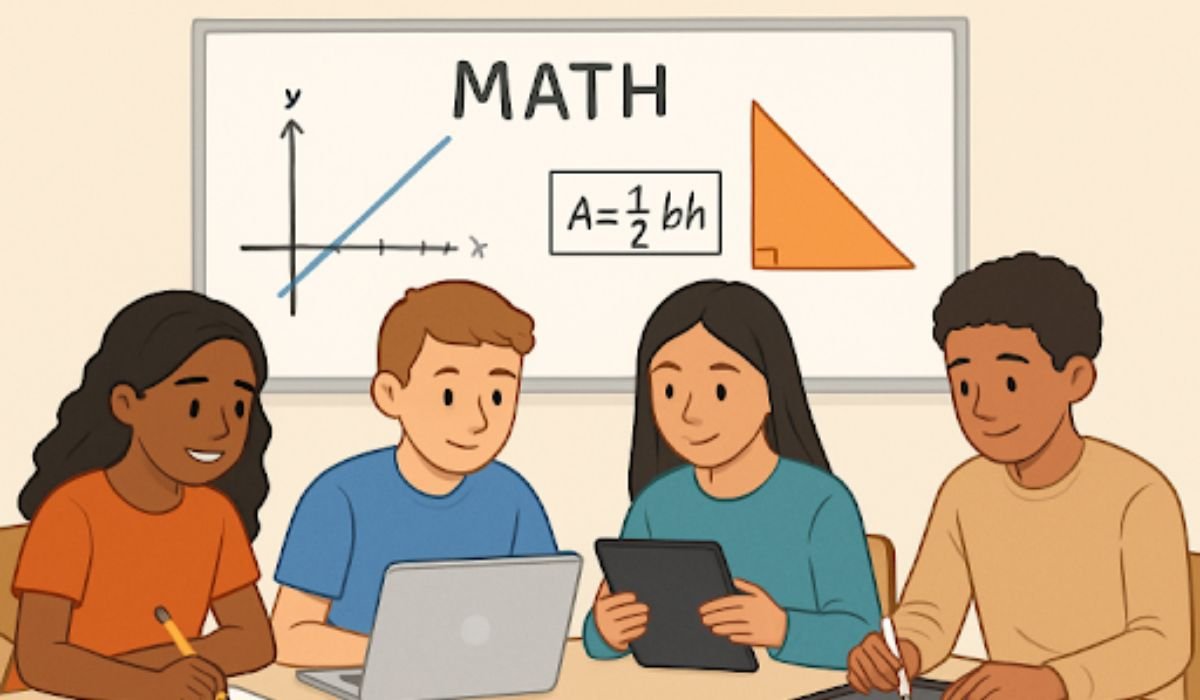
As mathematics education continues to evolve in a rapidly changing world, educators and policymakers are prioritizing new approaches to inspire students and deepen their understanding of mathematics. Teaching methods today are moving away from rote learning and passive memorization of formulas, instead focusing on creating active, dynamic environments that stress analytical thinking and consistently make real-world connections. These progressive frameworks recognize that mathematics secondary education includes a range of strategies designed to meet diverse learning styles, engage students across abilities, and foster a lifelong appreciation for math. By cultivating mathematical curiosity and confidence, teachers help students develop skills that go far beyond the classroom and are essential for modern life.
In recent years, educational leaders have blended rich mathematical tasks, technology integration, and professional development programs to reinvigorate secondary math classrooms. Teachers are increasingly empowered to address challenges such as declining math performance, math anxiety, and equity gaps by promoting innovative practice and collaborative learning opportunities. Research-backed strategies demonstrate that a creative, supportive math classroom can substantially influence student achievement, motivation, and confidence. Not only do these advances help students improve their test scores, but they also promote positive math identities and a strong sense of belonging among all learners—crucial for generating interest in further STEM pursuits.
Implementing Rich Mathematical Tasks
Rich mathematical tasks have become a vital part of the forward-thinking secondary classroom. These problems go beyond simple computations and instead encourage students to confront real-life scenarios, make connections across topics, seek multiple solutions, and communicate their reasoning clearly. When teachers incorporate open-ended activities with layered complexity, students develop critical thinking, logic, and problem-solving skills. They learn to connect mathematical ideas from geometry to algebra—or statistics to probability—and harness creativity while tackling challenges. A study of Ontario teachers underscores how these tasks promote group discussion, student reflection, and peer learning, resulting in deeper conceptual clarity, improved retention, and more meaningful learning experiences. Implementing these tasks regularly supports equity, as all students can engage at varying levels of entry and demonstrate understanding through multiple pathways.
READ ALSO: RemixPapa Study: Your Guide to Smarter Digital Learning
Integrating Technology and Digital Games
The integration of technology is transforming traditional math classrooms into digitally rich learning spaces filled with new opportunities. Digital game-based learning, interactive apps, online simulations, and virtual manipulatives tap into students’ innate curiosity and problem-solving instincts. Technology enables instant feedback on student work, personalized learning pathways, and scaffolding for struggling learners, enabling effective reach to a broader range of students. For instance, results presented at the 2024 National Council of Teachers of Mathematics (NCTM) conference showed that digital math games delivered significant, measurable gains in fraction understanding in less than 2 months, demonstrating major benefits for both high-achieving and struggling students. These findings clearly show the powerful role technology can play when it is purposefully woven into instruction, helping students visualize abstract concepts and collaborate remotely on shared mathematical tasks.
Professional Development Programs
Ongoing professional development is critical for teachers who wish to employ modern, research-backed strategies in their classes. In Germany, the QuaMath initiative focuses on delivering systematic change by providing mathematics teachers with robust instructional materials, access to mentorship, and regular high-quality training sessions—all designed to improve classroom practices and student learning outcomes. Through structured reflection, peer observation, and targeted workshops, teachers build a deeper understanding of both content and pedagogy. Similarly, Project SEED in the United States actively partners with school districts to construct rigorous, inquiry-driven math programs at the elementary and secondary levels. These programs offer workshops, classroom coaching, and opportunities to collaborate, helping teachers keep pace with evolving standards and expectations. The impact of such professional growth opportunities is far-reaching, boosting teacher confidence, improving student achievement, and extending professional networks for continual exchange of innovative ideas.
Encouraging Mathematical Creativity
Mathematical creativity has been recognized as a catalyst for stronger numeracy and literacy outcomes. When teachers nurture imaginative thinking—encouraging students to pose their own questions, investigate surprising patterns, and devise inventive solutions to challenging problems—they help students develop resilience and flexibility as problem solvers. This practice supports higher achievement and greater student engagement as learners see math as a playground for their curiosity rather than a chore. Furthermore, creative mathematical tasks provide avenues for risk-taking, self-expression, and divergent thought, allowing mathematics to be appreciated as an exploratory and dynamic discipline rather than a fixed set of rules. Such a mindset is essential for solving new types of problems in our complex and fast-moving world.
Collaborative and Cooperative Learning
Cooperative strategies such as group problem-solving, peer mentoring, and project-based learning increase student participation and build essential communication skills. In classrooms that prioritize collaboration, students are encouraged to explain concepts to one another, debate various solution paths, and collectively construct their mathematical knowledge. This not only cultivates mathematical fluency but also prepares learners for teamwork in academic, social, and future professional contexts. Group learning can be particularly beneficial for underrepresented or marginalized students, as it emphasizes multiple voices and perspectives, builds classroom community, and ensures inclusivity. By working together, students gain confidence, empathy, and a willingness to learn from mistakes—core attributes for both school and life.
Conclusion
Adopting innovative strategies in the teaching of mathematics is essential for developing confident, capable, and creative thinkers. Practices such as rich mathematical tasks, purposeful technology integration, ongoing professional growth, and a focus on collaboration and creativity equip students with the knowledge and skills to excel both academically and beyond the classroom. Ultimately, a forward-looking approach to mathematics education not only prepares students for future challenges but also transforms their perception of math into one of discovery, relevance, and opportunity. By supporting both teachers and students through these innovations, secondary mathematics classrooms can become dynamic spaces that unlock every learner’s potential.
YOU MAY ALSO LIKE: Top Islamic Schools in Dallas That Parents Are Raving About